Muscat and the Coast
Arab-Swahili capital sprawling 50 km between the Hajar mountains and the Arabian Sea, the country's gateway and departure point for the eastern wadis and Batinah's palm groves.
Muscat bears no resemblance to any other Gulf capital. There are no glass towers lined along a waterfront promenade: the city stretches nearly 50 kilometers between the Hajar range and the Arabian Sea, scattered in a chain of neighborhoods separated by rocky promontories. Urban code mandates white or sand-colored facades and limited building heights. From our office in the Al Khuwair district, we plan itineraries around this geography: Mutrah, the old port, is 20 minutes from the airport, and allow 30 to 40 minutes to reach the diplomatic quarters.
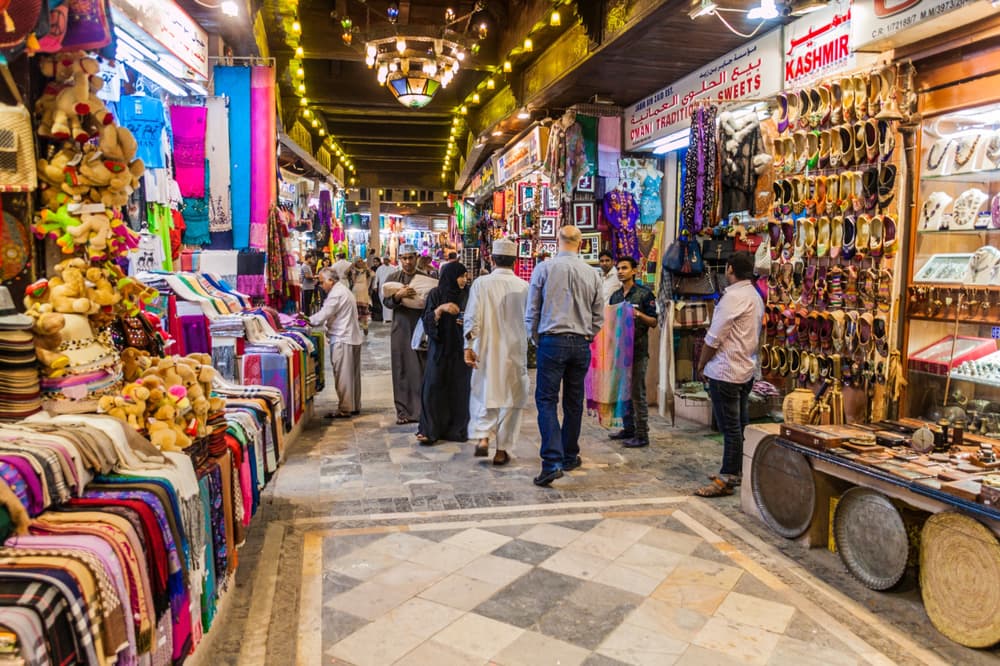
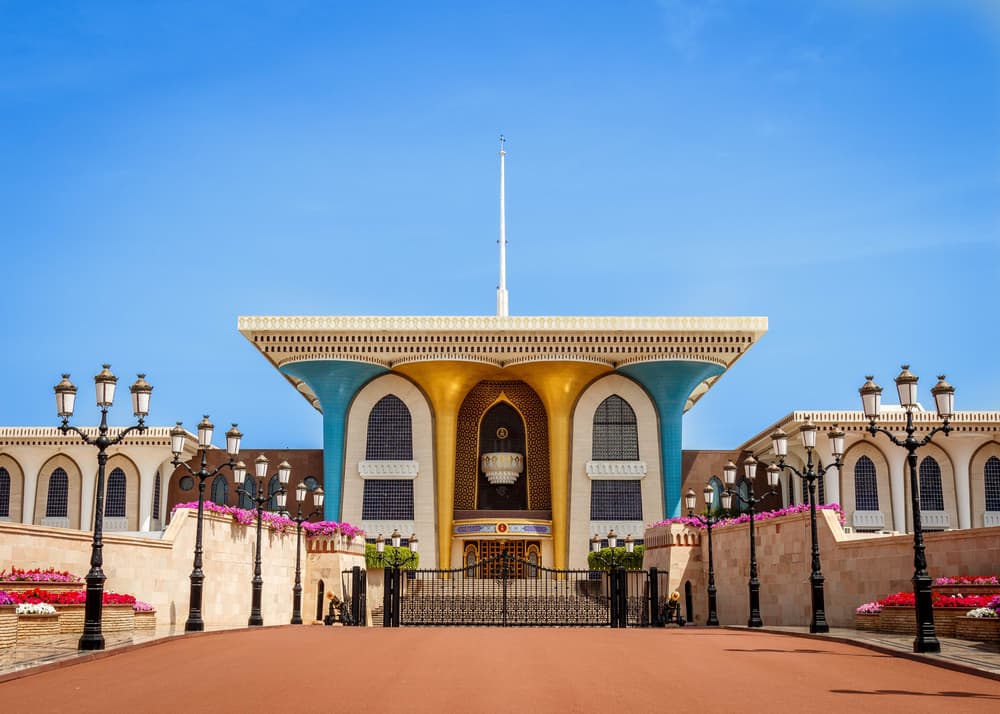
The Mutrah souk remains the historic heart. We take travelers there in late afternoon, around 5 p.m., when merchants reopen after the midday break and the scent of frankincense—olibanum from Dhofar—mingles with bukhoor essences. The covered alleyways open onto the corniche, facing wooden dhows moored and two 16th-century Portuguese forts, Jalali and Mirani, framing the sultan's Al Alam Palace. This is where you best read the country's maritime history: Oman controlled Zanzibar until 1856, and this dual Arab-Swahili identity still echoes in the cuisine and music of Mutrah's families.
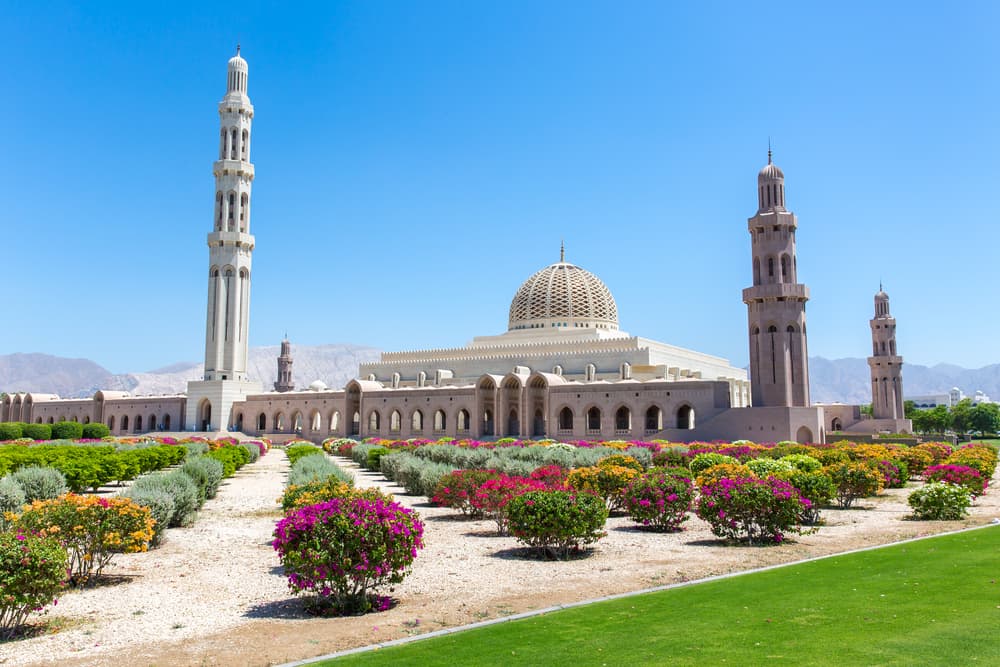
The grand Sultan Qaboos Mosque, open to non-Muslims from 8:30 a.m. to 11 a.m. except Fridays, should be visited in the morning. The main prayer hall houses a Persian carpet of 4,200 m² woven in a single piece and a 14-meter Swarovski chandelier. Covered clothing required for all, headscarf for women. We schedule this visit first thing in the morning, followed by the Royal Opera and then the National Museum, which well presents the genealogy of the Al Bu Said dynasties and the country's trading history.
To the west, the Batinah coast unfolds an alluvial plain of 270 kilometers between sea and mountains. It is Oman's densest agricultural region: date palms, mangoes, lemons, fed by falajs—ancient irrigation channels listed by UNESCO. The fishing villages of Seeb, Barka, Saham and Sohar preserve their morning fish markets, where tuna, grouper and hammerhead sharks are landed. Sohar, 230 km from Muscat, is said by tradition to be the birthplace of Sindbad the Sailor and remains an active port. Inland, Nakhal Fort, perched on a rocky outcrop, and the hot springs of Ain A'Thawwarah make for a good day loop from the capital.
East of Muscat, the coast changes character. The road heads toward Quriyat, Bimmah with its turquoise sinkhole, then Wadi Shab, a narrow gorge where you walk an hour between palm groves before swimming to a waterfall in a cave. On the southeastern tip, four hours' drive from the capital, the Ras al Jinz reserve protects one of the world's premier nesting sites for green sea turtles. Outings take place at night, supervised by rangers, year-round but peaking between June and September.
Climate dictates the calendar. The region is comfortable from October to April, with daytime temperatures of 25 to 30°C and cool nights sometimes dipping to 15°C in January. From May to September, the thermometer regularly exceeds 40°C with high humidity along the coast, making souk or fort visits difficult before sunset. This is also why we start almost all circuits in Muscat then head inland, where altitudes bring cooler temperatures.
To Discover
Mutrah Souk in late afternoon. Covered alleyways reopen around 5 p.m., frankincense scent rises from the incense shops. You emerge onto the corniche facing wooden dhows and the Portuguese forts Jalali and Mirani.
Sultan Qaboos Mosque in the morning. Visit between 8:30 and 11 a.m., except Fridays. Persian carpet of 4,200 m² woven as a single piece, chandelier of 14 meters. Covered clothing mandatory, headscarf for women.
Wadi Shab and Bimmah sinkhole. One and a half hours east of Muscat. An hour's walk between palm groves, then swimming to a waterfall sheltered in a cave. The Bimmah sinkhole, en route, offers a swim in turquoise waters.
Turtle nesting at Ras al Jinz. Protected reserve four hours' drive away, the country's southeastern tip. Night outings supervised year-round, green sea turtle nesting peaks between June and September.
Nakhal Fort and Batinah plain. Fortress perched on a rocky outcrop 120 km west, overlooking date palm plantations irrigated by falaj. Hot springs of Ain A'Thawwarah 10 minutes away.
When to Go
The comfortable window runs from October to April. In November and December, temperatures hover around 28°C during the day and 20°C at night, with clear skies. January and February are the coolest months, sometimes 15°C at sunrise, pleasant for wadi walks but a bit chilly for sea swimming for some travelers. March and April gradually warm to 32-35°C.
From May to September, the Batinah coast becomes challenging: 40 to 45°C with 70 to 80% humidity making the air oppressive. Souk and fort visits are only feasible before 9 a.m. or after 6 p.m. However, this is the sea turtle nesting season at Ras al Jinz, and the interior (Jebel Akhdar at 2,000 m altitude) remains 10 to 15°C cooler. Rain is rare and concentrated over a few episodes in February-March, sometimes violent with flash floods in wadis.
Practical Advice
We recommend 2 to 3 full days in Muscat and its immediate surroundings to cover the mosque, Mutrah, the national museum, the opera and a day trip to Wadi Shab or Nakhal. Muscat's international airport is the logical entry point for the country: most of our circuits start and end here. The region combines naturally with Nizwa and the interior (2 hours' drive west via the highway), Wahiba Sands (3 hours south) and a detour to Ras al Jinz if you want to see turtles. Musandam, an enclave to the north separated by the Emirates, requires an internal flight from Muscat. Dhofar, 1,000 km to the south, is reached by a 1.5-hour flight.
Comfort levels are high: international hotels, excellent roads, right-hand drive, perfect safety. The region suits both families with children (beaches, swimmable wadis, short distances) and contemplative travelers who want to take their time with museums and souks. Hikers will find mostly short walks, half-day outings. For more challenging trekking, we recommend Jebel Akhdar and Jebel Shams in the Nizwa region.