Ras Al Jinz
Ras Al Jinz
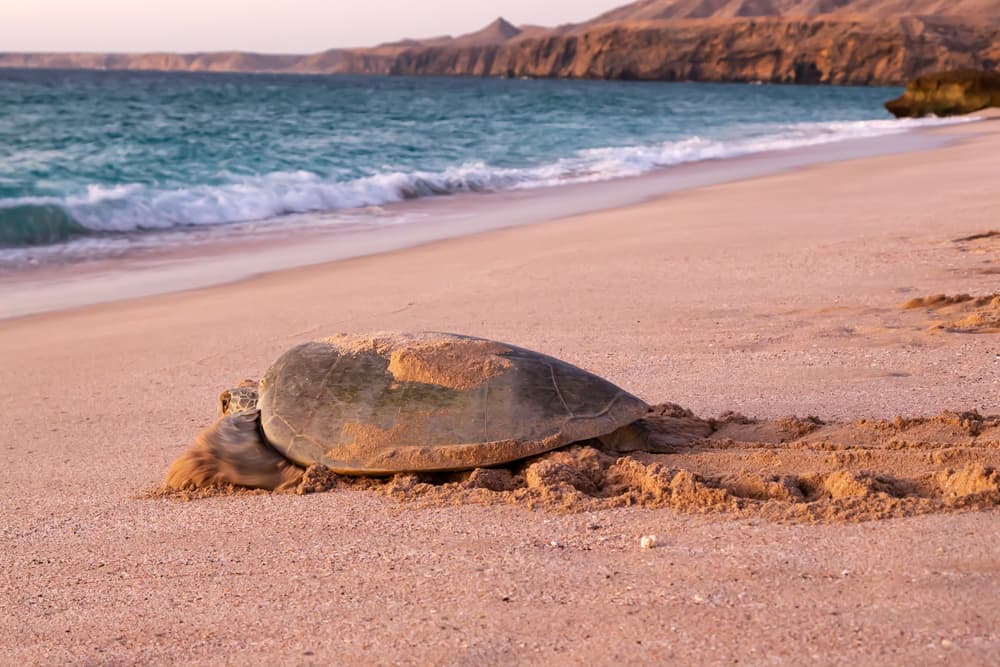
Ras Al Jinz, at Oman's eastern tip, ranks among the world's most important green turtle nesting beaches. Each night, females emerge onto the sand under the guidance of reserve naturalists.
Ras Al Jinz is the easternmost point of the Arabian Peninsula, on the coast of Ash Sharqiyah Governorate. This rocky cape is home to one of the world's most significant nesting beaches for the green sea turtle (Chelonia mydas). Hundreds of females emerge each night onto the sand to lay eggs, making this site a natural gathering place of rare intensity.
Quick Facts
- Access: night visits are only available with an English-speaking guide from Ras Al Jinz Turtle Reserve; beach access is free during the day, with nesting zones marked at night.
- What to wear: dark clothing recommended for night excursions (bright lights disturb the turtles).
- Recommended duration: plan for a night on-site or at least 2 to 3 hours for a guided night outing.
- Accommodation: Ras Al Jinz Turtle Reserve operates an eco-lodge directly on the property.
- Nesting season: year-round, with peak activity between May and October.
What You'll See
Each night, green sea turtles arrive on the main beach to dig nests and lay around a hundred eggs. At dawn, guides sometimes witness hatchings as newborns make their way to the sea. The reserve's interpretation center showcases the turtle's life cycle, threats to the species, and Oman's conservation initiatives.
History and Context
Turtles have frequented this cape for millennia; archaeological excavations nearby have uncovered remains of coastal settlements dating to the Bronze Age. The site is designated a protected nature reserve by the Omani government. Scientific nest management began in the 1990s, establishing Ras Al Jinz as a regional model for marine conservation.
Highlights of Your Visit
The Guided Night Excursion
Guides locate nesting females and escort visitors in silence, using red lights only. Watching a 220- to 330-pound turtle dig her nest just meters away remains an unparalleled experience. Group sizes are limited to minimize disturbance to the animals.
Egg Hatching
Approximately 55 days after laying, eggs hatch. Reserve guides monitor nests and, with luck, visitors may witness hatchlings emerging toward the sea at sunrise.
The Interpretation Center
The museum, integrated into the eco-lodge, explains green turtle biology, migratory routes, and scientific tagging efforts. Aquariums display various stages of egg development.
Visiting Etiquette and Rules
- White lights and camera flashes are strictly prohibited on the beach at night.
- Never touch a turtle or its eggs without your guide's permission.
- Stay within marked areas; leaving the group is not permitted.
- Silence is requested during approaches; loud noises cause females to retreat to sea.
- Leave no trace: no plastic or waste on the beach.
Photography Tips
At night, only red lights are permitted: a red filter over your headlamp will suffice. In manual mode, increase ISO and use the widest aperture possible. Sunrise over the cape offers golden light ideal for photographing the beach and rock formations without restrictions. Daytime hatchings, while rare, are the only moments when natural light is usable near nesting sites.
Location and Access
Ras Al Jinz sits at the southeastern tip of the Ras Al Hadd peninsula in Ash Sharqiyah Governorate. The route from Muscat hugs the coast and passes through Sur, the region's main town. From Sur, allow roughly 30 minutes' drive. No regular public transportation serves the cape; a rental car or transfer arranged by the eco-lodge are the standard options. Wheelchair access to the interpretation center is available; the sandy beach is less accommodating for wheelchairs.
Nearby Attractions
- Sur — historic dhow-building town, with its shipyard still active and a lively waterfront.
- Ras Al Hadd — neighboring cape with another nesting beach and a Portuguese fort on the shoreline.
- Wadi Bani Khalid — oasis featuring turquoise natural pools in the Ash Sharqiyah mountains, approximately two hours' drive away.
- Wahiba Desert (Sharqiyah Sands) — vast dune sea accessible from Sur, ideal for a night in a Bedouin camp.
Frequently asked questions
Nesting occurs year-round, but peak season runs from May through October. Outside these months, sightings are still possible but less frequent.
Yes, advance booking is highly recommended, especially during peak season. Group sizes are limited and spots fill quickly, particularly on weekends.
Absolutely—it's a classic itinerary from Muscat: one night in the Wahiba dunes, then drive to Sur and Ras Al Jinz for the turtle night tour.
Yes, but younger children must be able to remain quiet and walk on sand in darkness. Guides typically set a minimum age; confirm when booking.
Flashes and white lights are prohibited. With a red filter and a capable low-light camera, photos are possible, but respecting the animals takes priority.
Not required, but staying at the reserve's eco-lodge allows you to experience both the night tour and possibly a sunrise hatching—something day visitors cannot do.
Want to discover this destination?
Our local advisors design your tailor-made trip.