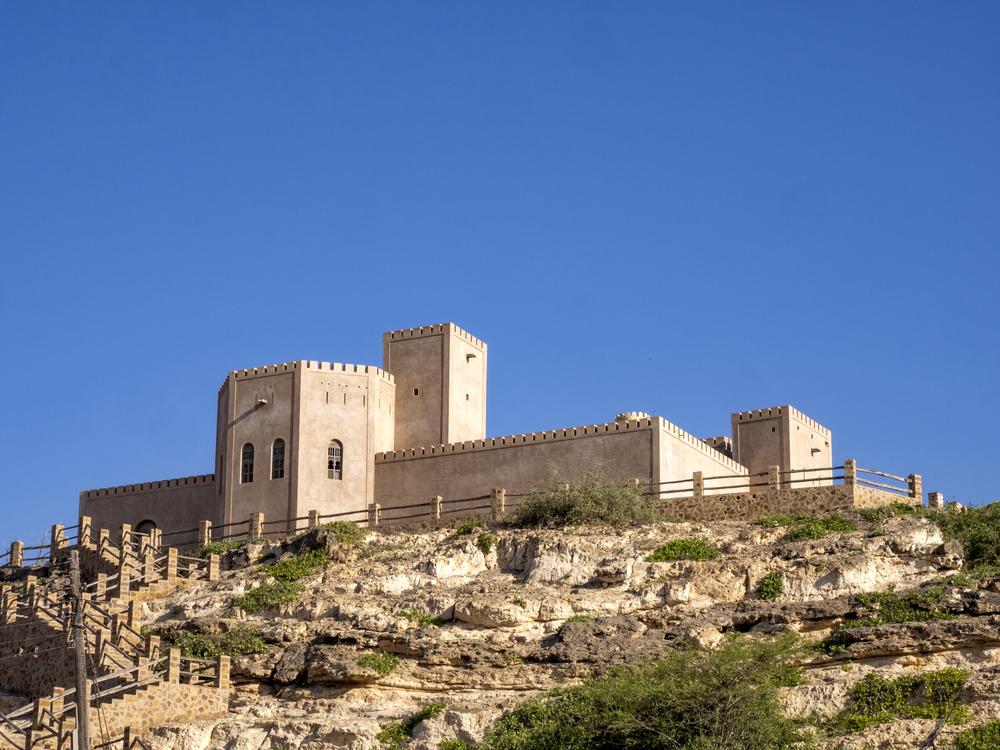
Khor Rori (Sumhuram)
Khor Rori (Sumhuram)
Khor Rori (Sumhuram) is an ancient port city listed as a UNESCO World Heritage site, founded in the 1st century BC for the incense trade. Its limestone ramparts overlook a natural lagoon populated by flamingos, east of Salalah.
Khor Rori, known in antiquity as Sumhuram, is an archaeological site listed as a UNESCO World Heritage site, located about twenty kilometers east of Salalah in the Dhofar region. An ancient incense port city, it overlooks a coastal lagoon where the Khor Rori river meets the Arabian Sea. The site reveals the remains of a fortified city dating from the 1st century BC, direct testimony to the ancient incense trade.
Practical Information at a Glance
- Access: Coastal road east of Salalah, accessible by car or taxi; no direct public transport.
- Recommended duration: 1.5 to 2 hours to explore the site and lagoon.
- Dress code: Modest clothing recommended; closed-toe shoes advised for walking on the ruins.
- Best time to visit: October to March, outside the Khareef monsoon season (June-September) when tracks become muddy.
What You'll See
The site comprises the ruins of a limestone fortified city: defensive walls, a temple dedicated to Sin (a South Arabian lunar deity), warehouses, dwellings, and an ancient port. The adjacent lagoon, now a nature reserve, is home to flamingos, herons, and sea turtles. The views over the Arabian Sea from the ramparts are breathtaking.
History and Context
Sumhuram was founded by the Hadramawt kingdom (present-day Yemen) to control the trade in Dhofari incense, one of antiquity's most precious commodities. The city exported incense to Rome, Greece, and India. It was abandoned around the 4th-5th century AD, likely due to the silting of the port. Italian-Omani excavations uncovered South Arabian inscriptions, imported ceramics, and religious artifacts.
In 2000, Khor Rori was inscribed on the UNESCO World Heritage List as part of the "Land of Frankincense" site, alongside Shisr (Ubar), Al-Baleed, and the frankincense plantations of Wadi Dawkah.
Highlights of Your Visit
The Ramparts and Temple of Sin
The limestone fortification walls are remarkably well preserved in places. The Temple of Sin, identified through South Arabian inscriptions, is one of the few remaining ancient places of worship in Dhofar whose architectural layout is still clearly legible.
Khor Rori Lagoon
Below the ruins, the lagoon forms a natural ornithological reserve. Early in the morning, flamingos and egrets gather here. The meeting point between freshwater and the Arabian Sea creates a rare ecosystem on the Omani coast.
The Site Museum
A small interpretation pavilion displays objects discovered during excavations: ceramics, coins, inscriptions. It provides essential context before exploring the ruins.
Photography Tips
The golden morning light is ideal for photographing the ramparts without harsh shadows. From the elevated areas of the site, the framing of ruins plus lagoon plus Arabian Sea is particularly striking. The lagoon photographs best in late afternoon when birds are most active. No known photography restrictions exist on the site.
Location and Access
Khor Rori is located approximately 40 km east of Salalah via the coastal road (Route 47). Car rental or taxis from Salalah remain the most practical options. The site is close to Mughsail beach to the west and the fishing village of Mirbat to the east. Wheelchair accessibility to the ruins is limited due to uneven terrain.
In the Surrounding Area
- Al-Baleed — Another UNESCO site of the Land of Frankincense, in Salalah itself, with a comprehensive Land of Frankincense museum.
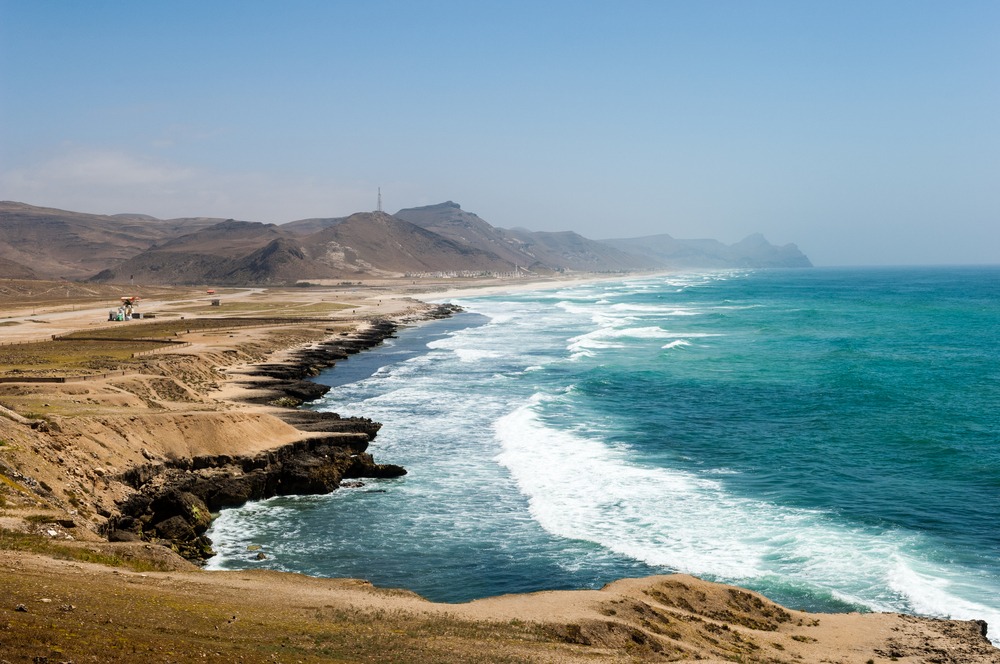
- Mughsail Beach — Long wild beach west of Salalah, with spectacular natural blowholes in season.
- Wadi Dawkah — UNESCO-listed frankincense tree plantation, inland from Salalah.
- Mirbat — Historic small port to the east, with an Ottoman fortress and authentic incense souk.
Frequently asked questions
October to March offers dry and pleasant weather. Avoid the Khareef monsoon season (June-September): access roads can be impassable and visibility reduced.
It is not an active place of worship, but modest clothing remains recommended out of respect for local customs. Closed-toe shoes are essential for walking on the stone ruins.
Yes. Al-Baleed (in Salalah) and Wadi Dawkah are part of the same UNESCO site "Land of Frankincense." One day is enough to visit Khor Rori and Al-Baleed; Wadi Dawkah requires an additional detour inland.
No photography restrictions are posted. Early morning offers the best light on the ramparts and lagoon.
Wheelchair accessibility is limited: the terrain is uneven and the ruins lack specific facilities. The lagoon can be observed from the parking area without entering the ruins.
The lagoon welcomes birds throughout the year, but diversity is greater in winter (October-March), the migration season. Flamingos, herons, and egrets are the most frequently observed species.
Interested in this visit?
We can include it in your personalised itinerary.