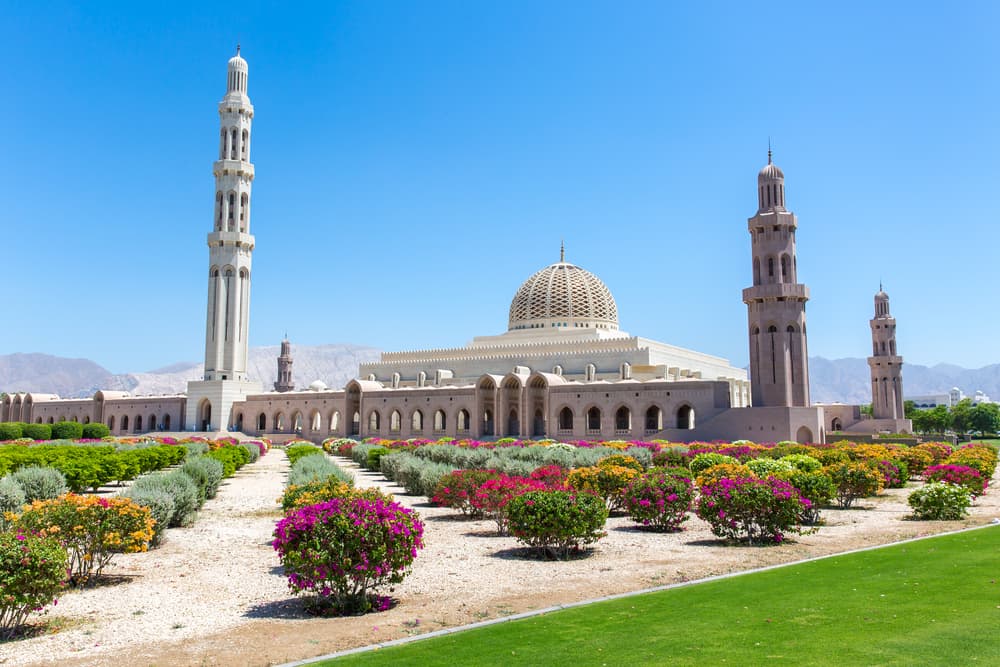
Sultan Qaboos Grand Mosque
Sultan Qaboos Grand Mosque
A major religious edifice in Muscat, the Sultan Qaboos Grand Mosque impresses with its Swarovski crystal chandelier, monumental Persian carpet and immaculate gardens. Open to non-Muslims in the morning, free entry.
The Sultan Qaboos Grand Mosque rises at the heart of Muscat as one of the most imposing religious buildings in the Islamic world. Built in white marble and adorned with a Swarovski crystal chandelier among the largest in the world, it welcomes thousands of worshippers daily and, outside prayer times, non-Muslim visitors. Its Islamic library, well-maintained gardens and sober yet grandiose architecture make it a central stop for any stay in Muscat.
Practical information at a glance
- Access for non-Muslim visitors: permitted in the morning outside prayer times (verify exact time slots on site or with your local travel agency)
- Entry: free
- Dress code: covering clothes for everyone; women must wear a headscarf covering their hair and an abaya (available at the entrance)
- Shoes: must be removed before entering the main prayer hall
- Recommended duration: 1 to 1.5 hours for a complete visit (main hall, gardens, library)
- Closure: Friday morning closed to non-Muslims
- Accessibility: the site is widely accessible, with paved pathways and ramps
What to see
The main prayer hall can accommodate more than 20,000 worshippers. Its central Swarovski crystal chandelier stands approximately 14 metres high and weighs several tonnes. The Persian carpet covering the floor — woven in Iran — is one of the world's largest hand-made carpets. The minarets reach approximately 90 metres. The exterior gardens, geometric and irrigated, offer a verdant contrast against the white marble.
History and context
The mosque was commissioned by Sultan Qaboos bin Said, who ruled Oman from 1970 to 2020. Its construction took six years; it was inaugurated in 2001. The project aimed to provide Oman with a national place of worship capable of hosting large collective prayers. Sultan Qaboos, a central figure in the country's modernisation, wanted the building to reflect traditional Islamic craftsmanship whilst incorporating contemporary materials and techniques.
Highlights of the visit
The main prayer hall
The interior space impresses with its proportions and quality of ornamentation: intricate Quranic calligraphy, coloured stained glass filtering morning light, and the Swarovski chandelier suspended at the centre of the main dome.
The monumental Persian carpet
Woven by Iranian artisans, this carpet covers virtually the entire floor of the main hall. Its floral and geometric patterns are visible from the side galleries, allowing appreciation of the overall composition.
The gardens and exterior courtyards
Palm-lined pathways and flower beds surround the mosque across several hectares. Early morning, with raking light on the white marble and reflections in the pools, offers a particularly serene atmosphere.
The Islamic library
Accessible from the complex, it holds works on Islam, Omani history and Islamic sciences. It is open to researchers and interested visitors.
Etiquette and visiting rules
- Covering clothes mandatory for men and women (shoulders, arms, legs covered).
- Women must wear a headscarf; abayas are provided at the entrance if needed.
- Shoes must be removed before entering the prayer hall.
- Silence and respectful behaviour required at all times.
- Do not disturb worshippers at prayer.
- Photography is permitted in most areas, but avoid photographing worshippers without consent.
Photography tips
Morning light, just after opening to visitors, is ideal: the raking sun illuminates the white marble and minarets without glare. For the Swarovski chandelier, position yourself beneath the central dome and use a wide-angle lens. The gardens photograph well from the central pathways, with minarets in the background. Photography is permitted in areas open to visitors; check on site regarding the main prayer hall.
Location and access
The mosque is situated in the Ghubrah district, west of central Muscat, near the main highway connecting Muscat to Muscat International Airport. By taxi or hire car, the journey from Old Muscat (Mutrah) takes approximately 20 to 30 minutes depending on traffic. Parking on site is ample. There is no convenient direct urban bus line from the city centre; taxi or ride-sharing remains the most convenient option.
Nearby
- Mutrah Corniche — Muscat's seafront promenade, with the Mutrah souq and its stalls of incense and crafts.
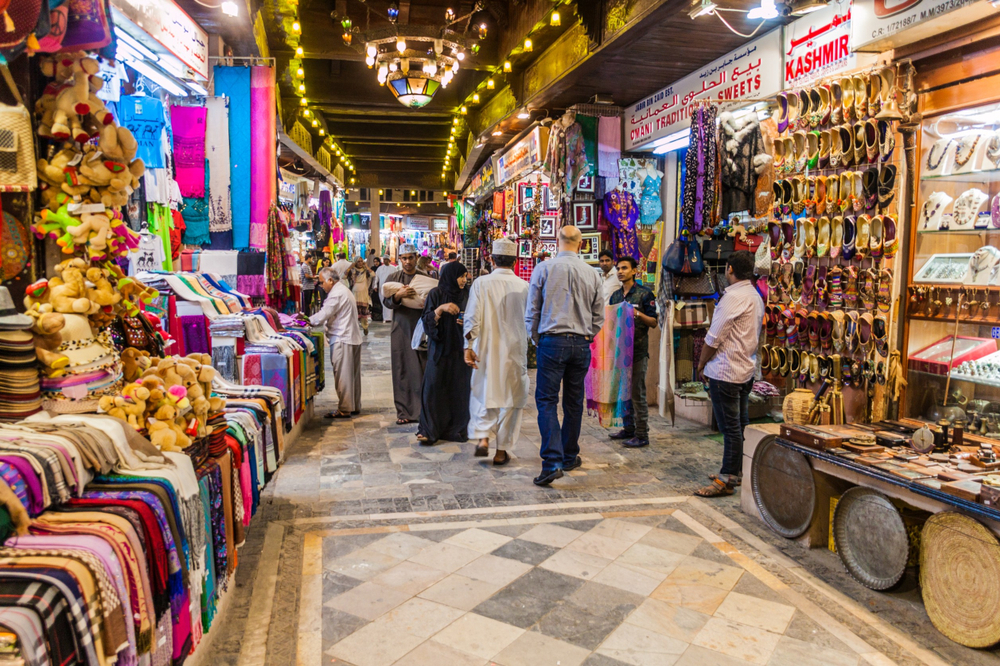
- Mutrah Souq — one of Oman's oldest covered markets, ideal for incense, spices and textiles.
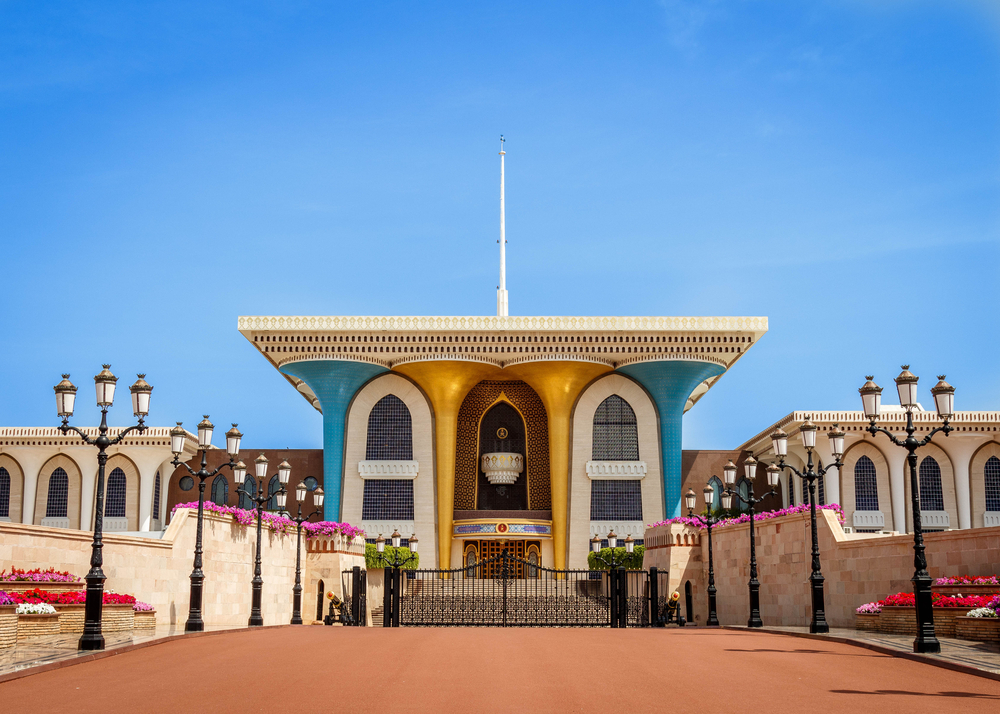
- Al Alam Palace — the sultan's ceremonial residence, visible from outside, flanked by two historic forts.
- Mirani Fort — 16th-century Portuguese fortress overlooking Muscat Bay.
- National Museum of Oman — permanent collections on Omani history and civilisations, open since 2016.
Frequently asked questions
Yes, non-Muslim visitors are welcome outside prayer times, generally in the morning. On Friday morning, the mosque is closed to non-Muslims. Verify exact time slots with your travel agency or at the site entrance.
Covering clothes are mandatory for everyone. Women must cover their hair with a headscarf and wear an abaya covering arms and legs. Abayas are available at the entrance if you don't have one. Men must have shoulders and legs covered.
Allow between 1 hour and 1.5 hours to visit the main prayer hall, gardens and Islamic library at a leisurely pace.
Entry is free for all visitors.
Yes, this is a common combination. Visit the mosque early in the morning, then head to the corniche and Mutrah Souq late morning or early afternoon. Plan for a taxi or ride-sharing between the two sites.
Photography is generally permitted in areas open to visitors and in the gardens. For the main prayer hall, check directly with staff on site, as rules may vary.
Nearby
Interested in this visit?
We can include it in your personalised itinerary.