Ras Al Jinz Turtle Reserve
Ras Al Jinz Turtle Reserve
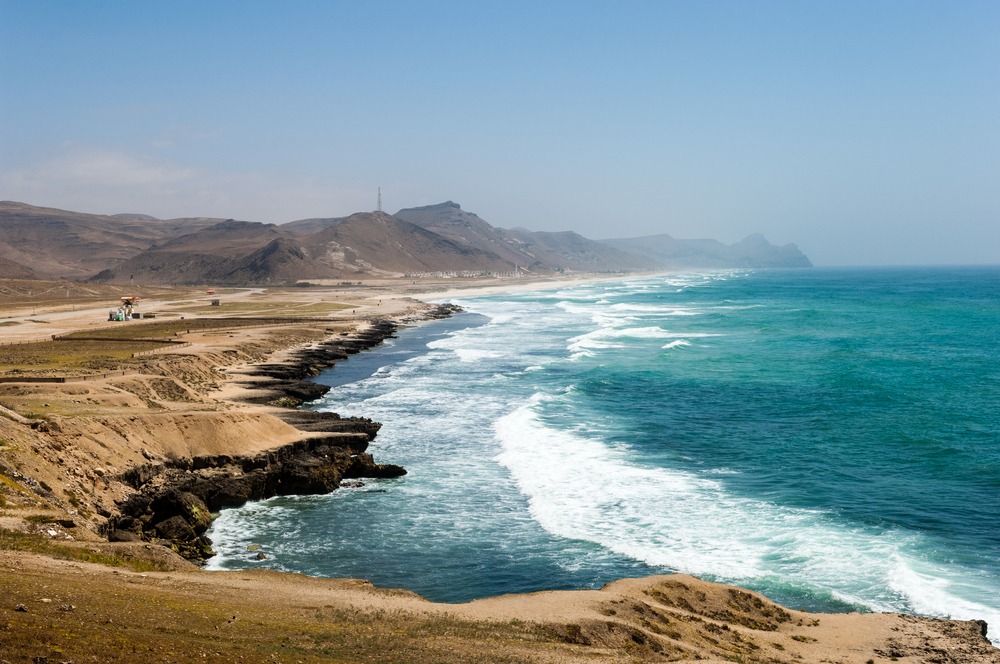
At the eastern tip of the Arabian Peninsula, Ras Al Jinz protects one of the Indian Ocean's major green turtle nesting grounds. Guided night excursions allow visitors to witness this rare natural spectacle along Oman's coast.
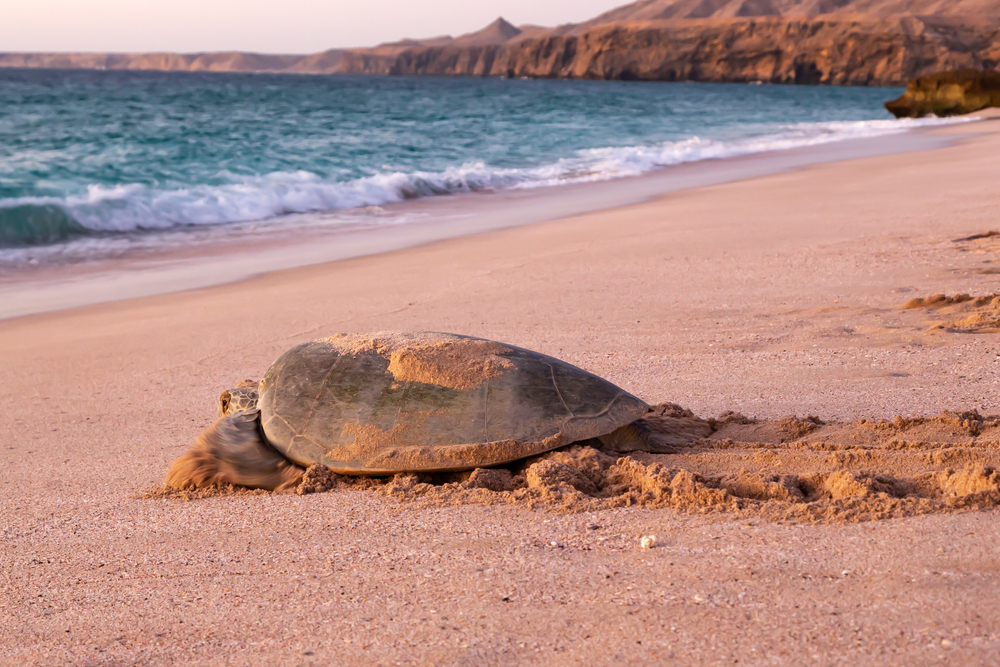
Ras Al Jinz occupies the eastern tip of the Arabian Peninsula, along the coast of the Ash Sharqiyah governorate. It is one of the most important nesting sites for green sea turtles (Chelonia mydas) in the Indian Ocean. Each night, females emerge onto the beach to nest—a natural spectacle managed by an official reserve that protects both the nests and visitors.
Quick Practical Guide
- Entry: paid access via the Ras Al Jinz Scientific & Visitor Centre (advance booking recommended, especially during peak season)
- Night excursions: organized in small groups with an official guide—independent beach access is not permitted after dark
- Suggested duration: 2 to 3 hours for a night excursion; a half-day if you combine the museum and morning beach walk
- What to wear: dark clothing recommended at night to avoid disturbing the turtles; closed-toe shoes recommended on the sand
- Lights and phones: flashlights and camera flashes are strictly forbidden on the beach during night excursions
- On-site accommodation: the centre offers bungalows and camping facilities; advance booking is essential during nesting season
What You'll See
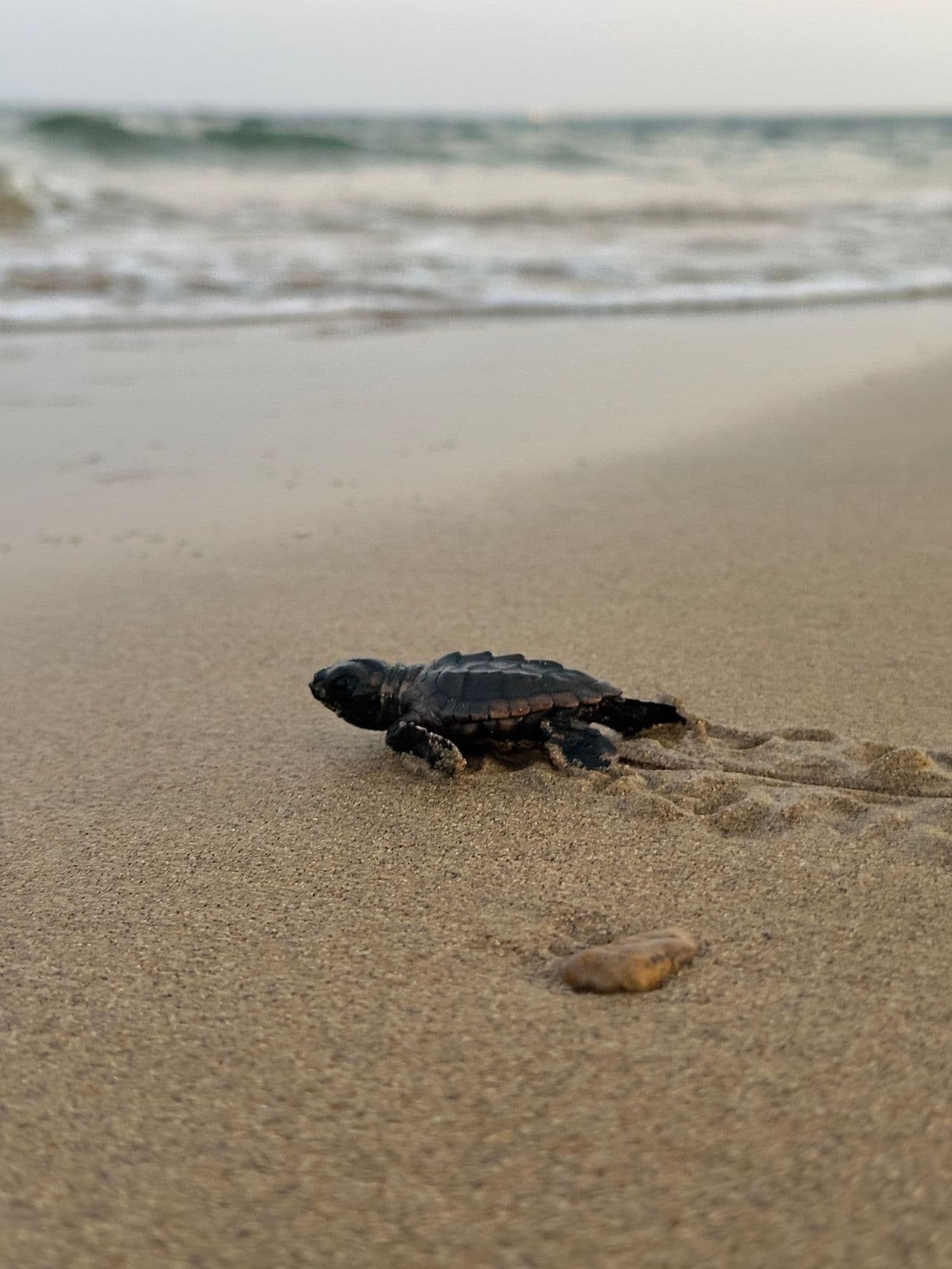
The reserve protects several kilometers of fine sand beach. At night, guides lead groups to observe turtles nesting or making their way back to the sea. In the morning, visitors can see the tracks left in the sand and, depending on the season, hatchlings heading into the ocean. The visitor centre houses a museum dedicated to marine turtle biology and the region's natural history.
History and Context
Ras Al Jinz's beach has served as a nesting site for millennia. Archaeological excavations nearby have uncovered Bronze Age remains, evidence of ancient human settlement along this coast. The Omani government established the reserve to combat egg poaching and nest disturbance—problems that had severely depleted turtle populations during the twentieth century.
Highlights of Your Visit
The Night Nesting Excursion
Between June and October, nesting activity reaches its peak. Guides spot females as they emerge and accompany groups at a respectful distance. Watching a 100 to 150-kilogram turtle excavate her nest and deposit her eggs remains a rare and silent experience.
Hatching and the Journey to the Sea
Approximately 55 days after nesting, hatchlings break through the sand and instinctively orient toward the ocean's shimmering horizon. Centre guides sometimes alert early-morning visitors when hatchings are occurring.
The Scientific Centre's Museum
Informative panels and aquariums explain the life cycle of Chelonia mydas, threats facing the species, and tagging programs conducted by Omani researchers. It provides excellent context before or after your beach excursion.
Visitor Etiquette and Rules
- Never approach a turtle without your guide's permission.
- Strictly forbidden to touch turtles, eggs, or hatchlings.
- No artificial light on the beach at night: turtles navigate using natural light sources.
- Stay with your group and remain silent; loud conversation disturbs the animals.
- Leave nothing on the beach: litter, cigarette butts, or objects can block nests.
Photography Tips
At night, flash photography is strictly prohibited. Some guides permit very dim red light for photography, but confirm this before bringing out your camera. In the morning, golden light across turtle tracks in the sand creates striking compositions. A fast lens (f/1.8 or f/2.8) and high ISO sensitivity are essential for night photography without flash.
Location and Access
Ras Al Jinz sits at the southeastern tip of the Ras Al Hadd peninsula, approximately 70 kilometers south of Sur. The road from Sur is paved and accessible by standard vehicle. No regular public transport serves the reserve; car rental or an organized tour are the most practical options. The scientific centre has a parking area. Wheelchair access to the visitor building is available; the sand beach remains challenging for wheelchairs.
Nearby Attractions
- Ras Al Hadd — a fishing village and historic fort a few kilometers north on the same peninsula.
- Sur — the ancient maritime city renowned for its traditional dhow shipbuilding and maritime museum, approximately 70 kilometers away.
- Wadi Bani Khalid — an oasis with natural pools in the Ash Sharqiyah mountains, reachable within an hour from Sur.
- Wahiba Desert (Sharqiyah Sands) — rust-colored dunes roughly two hours away, easily combined into a multi-day circuit.
Frequently asked questions
The nesting season runs from May to October, with peak activity between June and August. Turtles can be observed year-round, but numbers are significantly lower outside the main season.
Yes, especially between June and September. Night excursions are limited in group size to protect the turtles. Reservations can be made directly through the Ras Al Jinz Scientific & Visitor Centre.
Yes, provided children can follow the guidelines regarding silence and darkness. Guides are accustomed to family groups. Plan to bring warm clothing for night excursions, even in summer.
Flash-free photography is generally permitted with your guide's consent. Certain situations—such as a turtle actively nesting or newborns emerging—may require complete photography restrictions to avoid disturbing the animals.
A classic itinerary connects Muscat, the Wahiba Desert, Sur, and Ras Al Jinz over three to four days. The coastal road between Sur and Ras Al Jinz passes quiet beaches and deserves a stop.
The centre offers bungalows and camping facilities directly on the grounds. Staying on-site allows you to participate in both the night excursion and morning observation of tracks or hatchings.
Want to discover this destination?
Our local advisors design your tailor-made trip.