Salalah
Salalah
Salalah, in southern Oman, is the city of the khareef monsoon and Dhofar's legendary frankincense. Beaches, cliffs, traditional souks and UNESCO-listed archaeological sites make it a unique destination in the Arabian Peninsula.
Salalah is the capital of Dhofar Governorate in southern Oman, approximately 1,000 km from Muscat. This coastal city overlooking the Arabian Sea is distinguished by its summer monsoon — the khareef — which transforms it into a green, misty landscape from June to September, a rare phenomenon in the Arabian Peninsula. Birthplace of the legendary frankincense of Dhofar and the native city of Sultan Qaboos, Salalah blends beaches, cliffs, archaeological sites and incense markets.
Quick Facts & Information
- Access: Salalah International Airport (SLL), with direct flights from Muscat and several Gulf cities.
- Best time to visit: October to May for sunshine and sea; June to September for the khareef (green landscapes, cooler temperatures, but frequent rain).
- Recommended duration: 3 to 5 days to explore the city and surrounding areas.
- Dress code: Modest attire recommended in town and souks; swimwear acceptable on beaches.
- Language: Arabic; English spoken in hotels and tourist establishments.
- Currency: Omani rial (OMR).
What to See
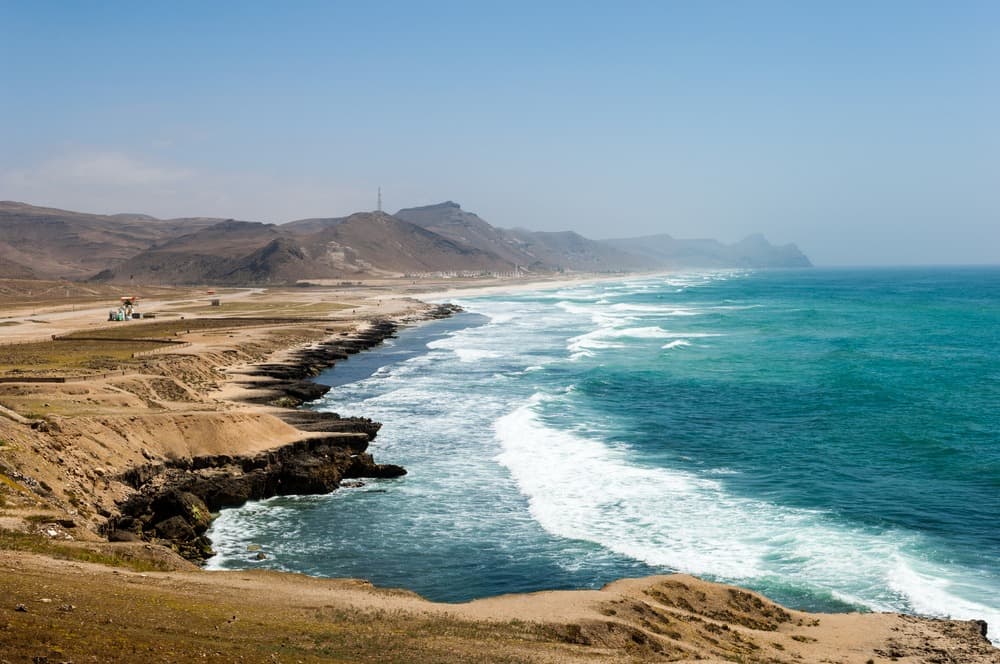
Salalah presents several distinct faces. Al Haffa Souk is the traditional market for frankincense, oils and Dhofar products. The Salalah Corniche stretches along the Arabian Sea for several kilometres. The eastern beaches — Mughsail, Fazayah — offer turquoise waters and limestone cliffs pierced with sea caves. Inland, coconut palm plantations and verdant wadis contrast sharply with the surrounding desert.
History and Context
For centuries, Salalah was a major hub on the frankincense trade route, exporting to ancient Egypt, Rome and India via the Frankincense Route, designated a UNESCO World Heritage Site. The Dhofar region is home to frankincense trees (Boswellia sacra) that produce the most prized resin in the world. Sultan Qaboos bin Said, who modernized Oman from 1970 to 2020, was born in Salalah in 1940; his mausoleum stands there.
Highlights of Your Visit
Al Haffa Souk
This covered market is the traditional commercial heart of Salalah. Here you'll find raw frankincense (luban), ceramic incense burners, fragrant oils and handcrafted Dhofar products. The atmosphere is authentically local, far from standardized tourist markets.
Mughsail Beach and Cliffs
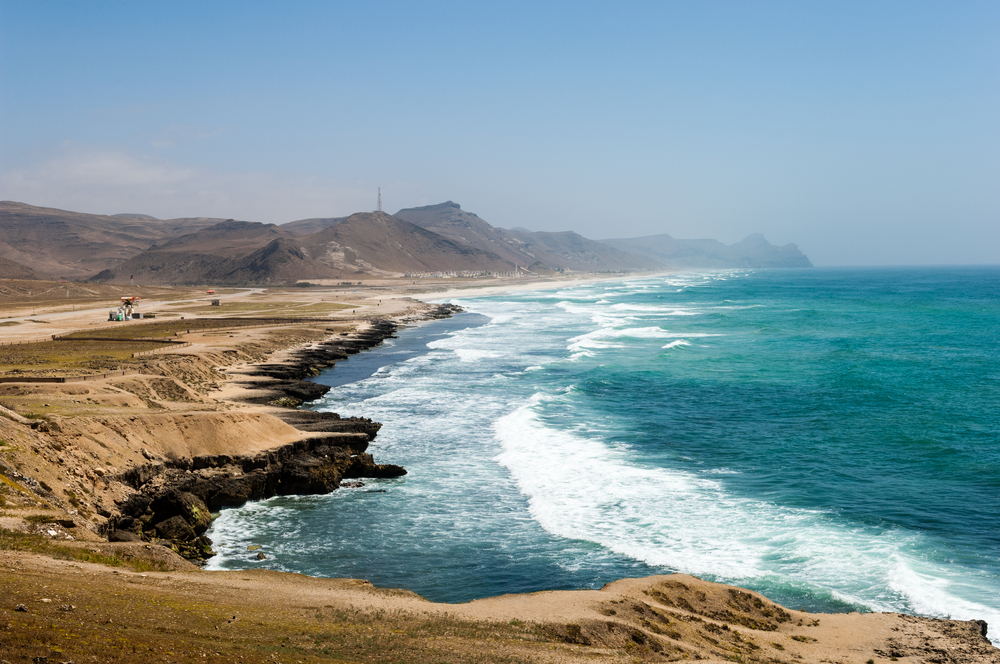
About forty kilometres west of the city, Mughsail features a white sand beach bordered by spectacular cliffs. Natural blowholes in the rock spray jets of water during heavy swells, a phenomenon particularly visible during the khareef.
Sumhuram Archaeological Site
Designated a UNESCO World Heritage Site as part of the Frankincense Route, Sumhuram is an ancient port city dating back to the 1st millennium BCE. The ruins overlook Khor Rouri, a lagoon where frankincense-laden vessels once set sail towards Arabia and India.
Wadi Darbat
This wadi, east of Salalah, fills with water during the khareef and forms temporary waterfalls. Herds of camels and local Dhofari cattle graze freely here. Outside the monsoon season, the landscape remains greener longer than elsewhere in the region.
Sultan Qaboos Mausoleum
Inaugurated following the Sultan's death in 2020, the mausoleum is a modest white marble structure in the Al Houd district. Public access is limited to the exterior grounds; the visit remains a moment of reflection for Omanis.
Photography Tips
- Mughsail's cliffs are most photogenic in late afternoon, when raking light accentuates the relief.
- During the khareef, morning mist creates atmospheric scenes in coconut plantations and wadis.
- At Al Haffa Souk, ask permission before photographing vendors.
- At Sumhuram, sunset over Khor Rouri casts a golden glow on the lagoon.
Location and Access
Salalah is located in the far south of Oman, on the Arabian Sea coast. Salalah International Airport receives direct flights from Muscat (approximately 1 hour 15 minutes) and several Gulf destinations. The drive from Muscat via the desert highway takes approximately 10 to 12 hours by car. In town, car rental is the most practical way to reach the scattered sites across the region.
Nearby Attractions
- Sumhuram (Khor Rouri) — ancient city on the Frankincense Route, UNESCO-listed, east of Salalah.
- Mughsail Beach — cliffs, blowholes and white sand west of the city.
- Wadi Darbat — verdant wadi with seasonal waterfalls and local wildlife.
- Ain Razat — natural spring surrounded by gardens, a popular picnic spot for Omani families.
- Ubar (Shisr) — archaeological site linked to the legendary frankincense city, in the desert north of Dhofar.
Frequently asked questions
October to May offers sunny weather ideal for beaches and archaeological sites. June to September brings the khareef with rain and cooler temperatures, transforming the region into a green landscape — a unique experience but with occasionally slippery roads and reduced visibility.
Yes, car rental is strongly recommended. Sites like Mughsail, Wadi Darbat and Sumhuram are spread across tens of kilometres and poorly served by public transport.
Yes, but plan for at least 3 nights in Salalah to make the most of it. The domestic flight from Muscat is the most practical solution; the drive by car is long and crosses arid desert.
The frankincense produced by Dhofar's Boswellia sacra trees is considered among the purest in the world. Quality varies depending on harvest season and production zone; souk vendors at Al Haffa can guide you in your selection.
Outside the khareef, beaches like Mughsail and Fazayah offer calm conditions. During the monsoon (June-September), the sea is rough and swimming is not recommended on most exposed beaches.
As throughout Oman, attire covering shoulders and knees is expected in souks, mosques and public places. On tourist beaches, swimwear is acceptable. Avoid overly light clothing in town.
Attractions in Salalah
Khor Rori (Sumhuram)
Khor Rori (Sumhuram) est une cité portuaire antique classée UNESCO, à l'est de Salalah. Ruines millénaires, lagon à flamants roses et musée archéologique composent une visite unique dans le Dhofar.
Mughsail Beach
À l'ouest de Salalah, la plage de Mughsail est connue pour ses blowholes naturels qui projettent l'eau de mer en geysers depuis les fissures rocheuses, surtout actifs pendant la mousson khareef.
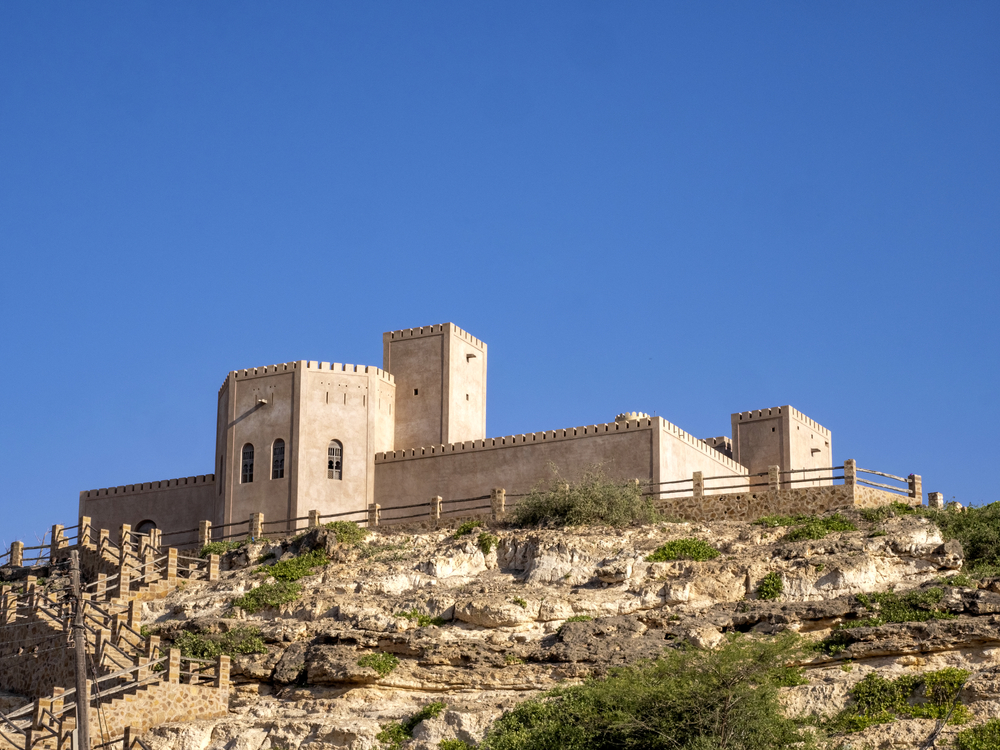
Khor Rori (Sumhuram)
Khor Rori (Sumhuram) est une cité-port antique classée UNESCO, fondée au Ier siècle av. J.-C. pour le commerce de l'encens.
Want to discover this destination?
Our local advisors design your tailor-made trip.