Al Alam Palace
Al Alam Palace
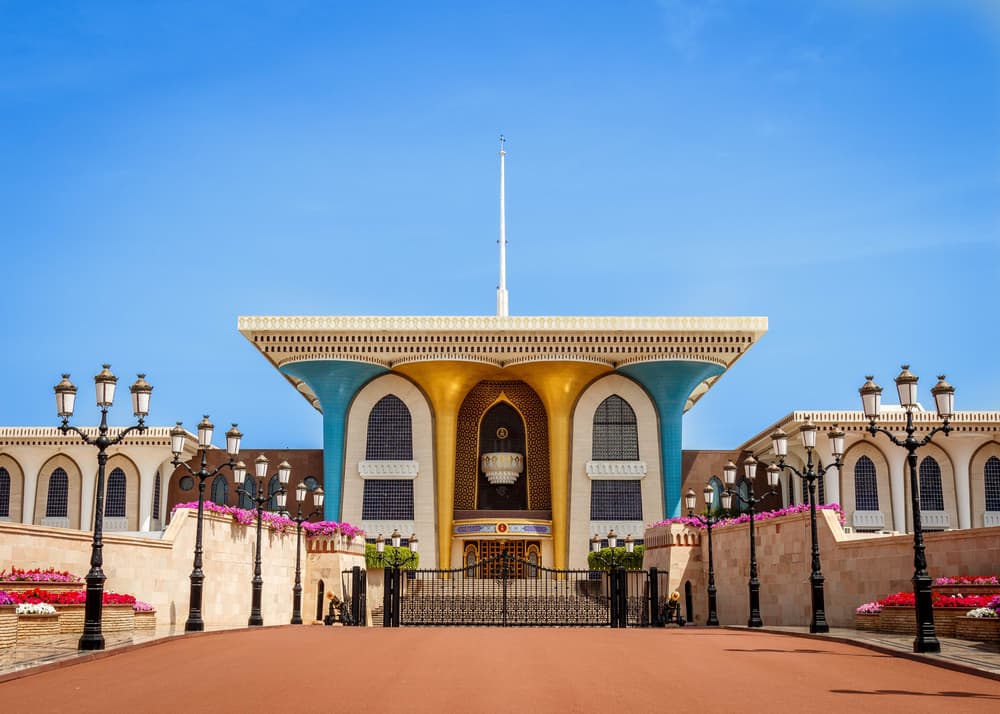
The ceremonial residence of the Sultan, Al Alam Palace overlooks Muscat's historic bay. Its striking blue and gold façade, framed by the 17th-century Mirani and Jalali forts, offers one of Oman's most iconic vistas.
Al Alam Palace stands in the heart of Muscat's old town, facing the Arabian Sea. The ceremonial residence of Sultan Qaboos bin Said, it cannot be visited from within, but its striking blue and gold façade, flanked by two 17th-century Portuguese forts, ranks among the country's most photographed landmarks. The site is easily reached on foot from the Mutrah waterfront promenade.
Quick reference
- Access: the esplanade in front of the palace is freely accessible; the interior remains closed to the public.
- Dress code: smart casual is recommended—shoulders and knees covered, out of respect for the official nature of the site.
- Recommended duration: 30 to 45 minutes for exterior exploration and photography.
- Accessibility: the esplanade is level and wheelchair accessible.
What to see
The main façade displays an alternation of cobalt blue and gilt, an architectural style that marries Islamic influences with contemporary elements. On either side rise the Mirani Fort and Jalali Fort, two Portuguese bastions that frame the bay. The paved esplanade offers an unobstructed view of the sea and the rocky hills that encircle Muscat.
History and context
The current palace was built in the 20th century on the site of an earlier sultanal residence. Its name means "the flag" in Arabic, a reference to the flagpole that crowns it. Under Sultan Qaboos's reign (1970–2020), it served as the setting for state receptions and official ceremonies. The neighbouring forts date from the Portuguese occupation of the 16th and 17th centuries.
Highlights of the visit
The façade and esplanade
The building's symmetry, gilded columns, and manicured gardens surrounding it reward close observation. The esplanade comes alive in the late afternoon with Omani families and strollers.
Mirani and Jalali forts
Visible from the esplanade, these two forts command the rocky headlands of the bay. Jalali Fort now houses a museum; Mirani Fort remains military property. Their silhouette at sunset is particularly striking.
Muscat's waterfront
Al Alam Palace sits along the corniche, which stretches for several kilometres along the bay. Walking from Al Alam to the Mutrah Souk takes roughly twenty minutes and allows you to pass alongside historic government buildings.
Photography tips
The golden light of late afternoon enhances the façade's blue and gold tones. Position yourself facing the main entrance to frame the palace with the two forts in the background. In the morning, low-angle light from the sea illuminates architectural details. Drones are prohibited near official buildings.
Location and access
Al Alam sits in Muscat's historic quarter, just a few minutes' drive from the Mutrah Souk. The coastal road connects the site easily to the city centre. Parking is available near the waterfront promenade. There is no direct bus line from central Muscat; a taxi or ride-hailing app remains the most convenient option.
Nearby attractions within walking distance or minutes away:
- Jalali Fort — Portuguese bastion visible from the esplanade.
- Mirani Fort — the counterpart to Jalali, on the western side of the bay.
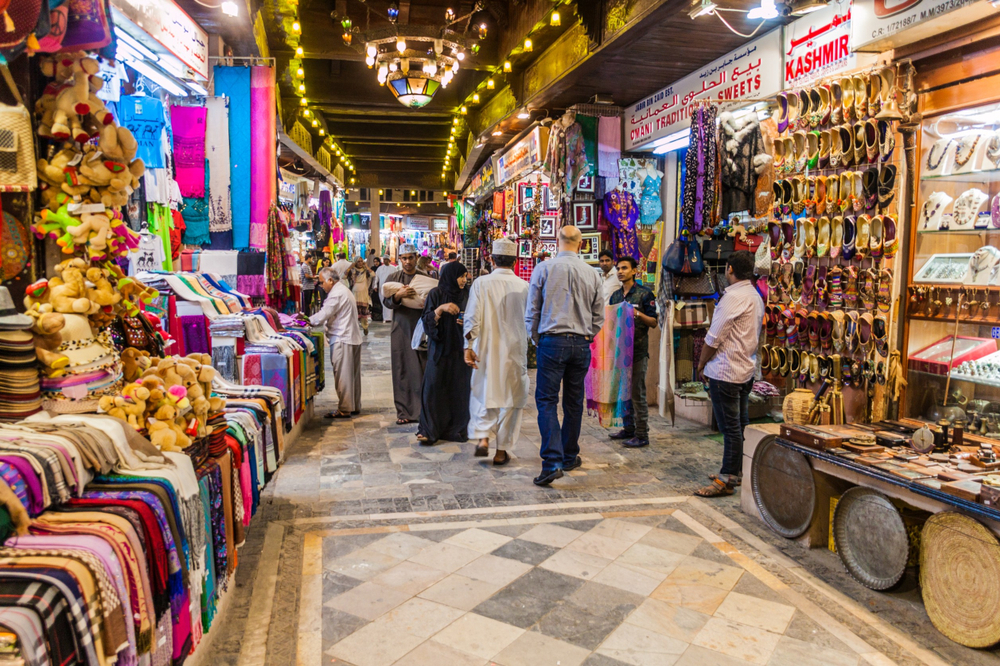
- Mutrah Souk — traditional covered market, roughly twenty minutes on foot along the corniche.
- Mutrah Corniche — waterfront promenade linking the palace to the Mutrah quarter.
In the area
- Grand Mosque of Sultan Qaboos — major religious edifice in Muscat, about twenty minutes by car.
- National Museum of Oman — collections on Omani history and culture, in the Shati Al Qurum quarter.
- Mutrah Souk — traditional crafts, incense, and silverware in a historic bazaar.
- Bait Al Zubair Museum — private museum dedicated to Omani heritage, in Muscat's old town.
Frequently asked questions
No. Al Alam is an official ceremonial residence; only the exterior esplanade is open to the public.
Smart casual is recommended: shoulders and knees covered, as a mark of respect for the site's official status.
Late afternoon offers the finest light on the gilded façade. Sunrise, with the sea as a backdrop, also suits early-morning photographers.
Yes, the two sites are connected by the corniche. Plan for roughly twenty minutes on foot from the palace esplanade to the souk.
No. Drones are prohibited near official buildings and military installations in Muscat.
October to March brings pleasant temperatures (68–82 °F). Summer (June–August) is intensely hot and humid; visits are best undertaken early in the morning.
Nearby
Interested in this visit?
We can include it in your personalised itinerary.