Nizwa Fort
Nizwa Fort
Dominating the Nizwa palm groves since the 17th century, this fort with its massive round tower is among the best-preserved in Oman. Steps away, the souq offers khanjars and silver jewellery in an authentic atmosphere.
Nizwa Fort has dominated the palm groves of interior Oman since the 17th century. Built under Imam Sultan bin Saif Al Ya'aruba, it remains one of the best-preserved forts in the sultanate. Its massive round tower — among the largest in Arabia — houses a network of rooms, wells and defensive passages that tell ten centuries of tribal and religious power. The bustling souq that stretches at its foot adds to the site's appeal.
Quick Reference Guide
- Entrance: paid admission (combined ticket for fort + souq available)
- Dress code: covered clothing recommended; shoulders and knees covered
- Suggested duration: 1.5 to 2 hours for the fort alone, longer with the souq
- Access: Nizwa city centre, accessible by car or taxi from Muscat (approximately 165 km)
- Accessibility: limited — narrow and steep stairs in the main tower
What to See
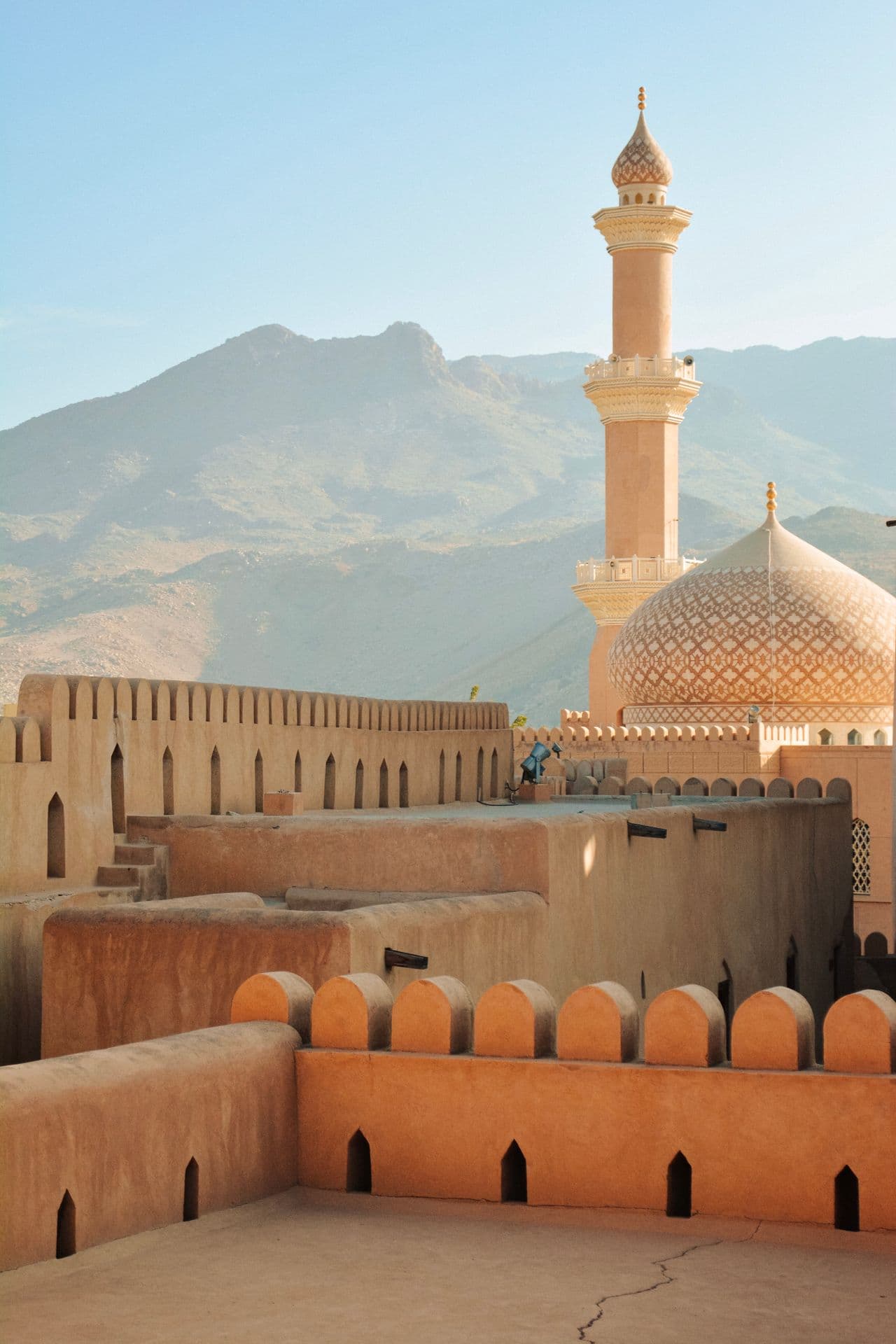
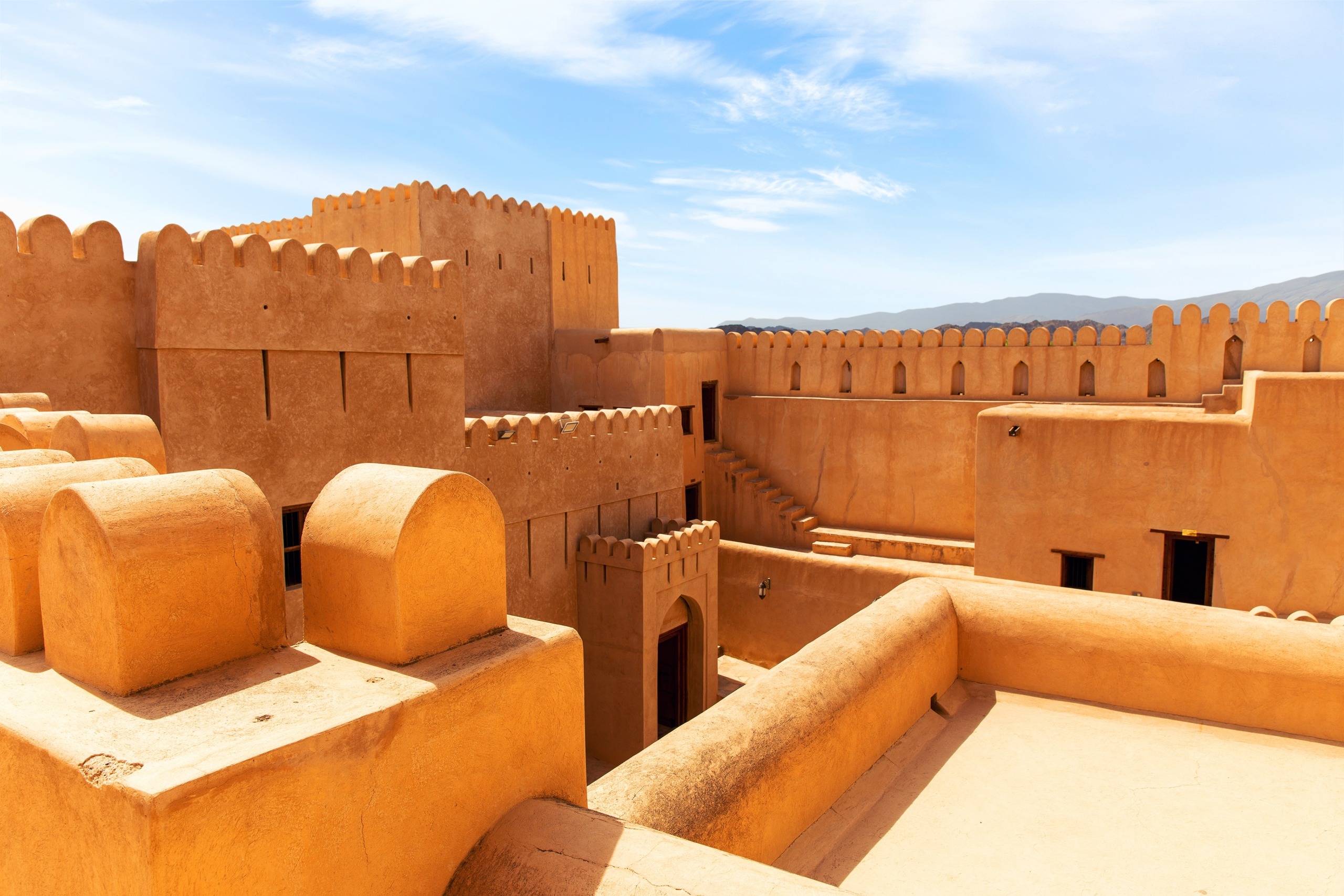
The central cylindrical tower rises to about thirty metres. It contains dozens of stacked rooms: assembly halls, prison, water reserves, armoury. Loopholes and holes for pouring boiling oil testify to sophisticated defensive systems. The terrace offers an unobstructed view over the Nizwa palm groves and the western Hajar mountains.
The fort is flanked by an older rectangular fortress with square towers, which today houses exhibitions on local history, traditional Omani craftsmanship and daily life.
History and Context
Nizwa was the first capital of the Omani Imamate and a major intellectual and religious centre. Construction of the main tower began around 1650 and lasted about a dozen years. Imam Sultan bin Saif Al Ya'aruba had just driven the Portuguese from the Omani coast; the fort symbolised the restored power of the interior. In the 19th century, Nizwa remained strategically important during conflicts between imams and sultans.
Highlights of Your Visit
The Round Tower and Its Defences
The spiral staircase climbing to the terrace passes through rooms with low ceilings, designed to slow invaders. Holes pierced through the slabs allowed defenders to pour boiling oil or water on attackers. An ingenious system of staggered doors completes the defensive design.
The Panoramic Terrace
From the top of the tower, the palm groves stretch endlessly towards the south. To the north, the grey cliffs of Jebel Akhdar close off the horizon. This is one of the most photographed panoramas in interior Oman, particularly striking in late morning.
Nizwa Souq
Directly adjacent to the fort, the souq is renowned for its traditional weapons (the khanjar, the curved Omani dagger), pottery and silver jewellery. On Friday mornings, a livestock market takes place here — an authentic scene, quite different from coastal tourist souqs.
Etiquette and Visiting Rules
- Cover shoulders and knees; women are not required to wear a veil but modest clothing is expected.
- Speak quietly in exhibition rooms.
- Do not touch displayed items without permission.
- Respect areas marked as off-limits (certain tower passages).
Photography Tips
Morning light (before 9 a.m.) is ideal for photographing the fort's façade without backlighting. From the terrace, late morning sun illuminates the palm groves without harsh shadows. Inside, rooms are dimly lit: a camera capable of high ISO or a lightweight tripod is useful. Photography is permitted throughout the site.
Location and Access
The fort stands in the heart of Nizwa, approximately 165 km south-west of Muscat via the motorway. The town is accessible by rental car or bus from the capital. From the fort, the Nizwa souq is just a short walk away. Jebel Akhdar lies about 45 km to the north, and Bahla Fort (UNESCO-listed) is roughly thirty kilometres to the west.
Nearby Attractions
- Nizwa Souq — traditional market adjacent to the fort, specialising in khanjars, silver jewellery and pottery.
- Bahla Fort — medieval fortress listed as a UNESCO World Heritage Site, about thirty kilometres to the west.
- Jebel Akhdar — mountainous plateau at over 2,000 metres altitude, known for its Damask roses and perched villages.
- Falaj Daris — traditional irrigation system listed by UNESCO, in Nizwa itself, a remarkable example of Omani hydraulic engineering.
Frequently asked questions
From October to March, temperatures remain pleasant (15-25 °C). Summer (June-August) is very hot in Nizwa, with peaks exceeding 40 °C; visits are still possible early in the morning.
Clothing covering shoulders and knees is expected for all visitors. While not a place of worship, Omani standards of modesty apply.
Yes. The fort takes approximately 1.5 to 2 hours; the adjacent souq can be explored in 30 to 60 additional minutes. A morning is enough for both.
Yes, photography is free throughout the site, including in exhibition rooms and on the panoramic terrace.
Access is limited: the main tower has narrow and steep stairs. The outer courtyard and some ground-floor rooms remain accessible.
Yes. The road from Muscat is fast and well-maintained. Leaving early, it's possible to visit the fort, the souq and make a detour to Bahla or Jebel Akhdar in the same day.
Interested in this visit?
We can include it in your personalised itinerary.