Wadi Tiwi
Wadi Tiwi
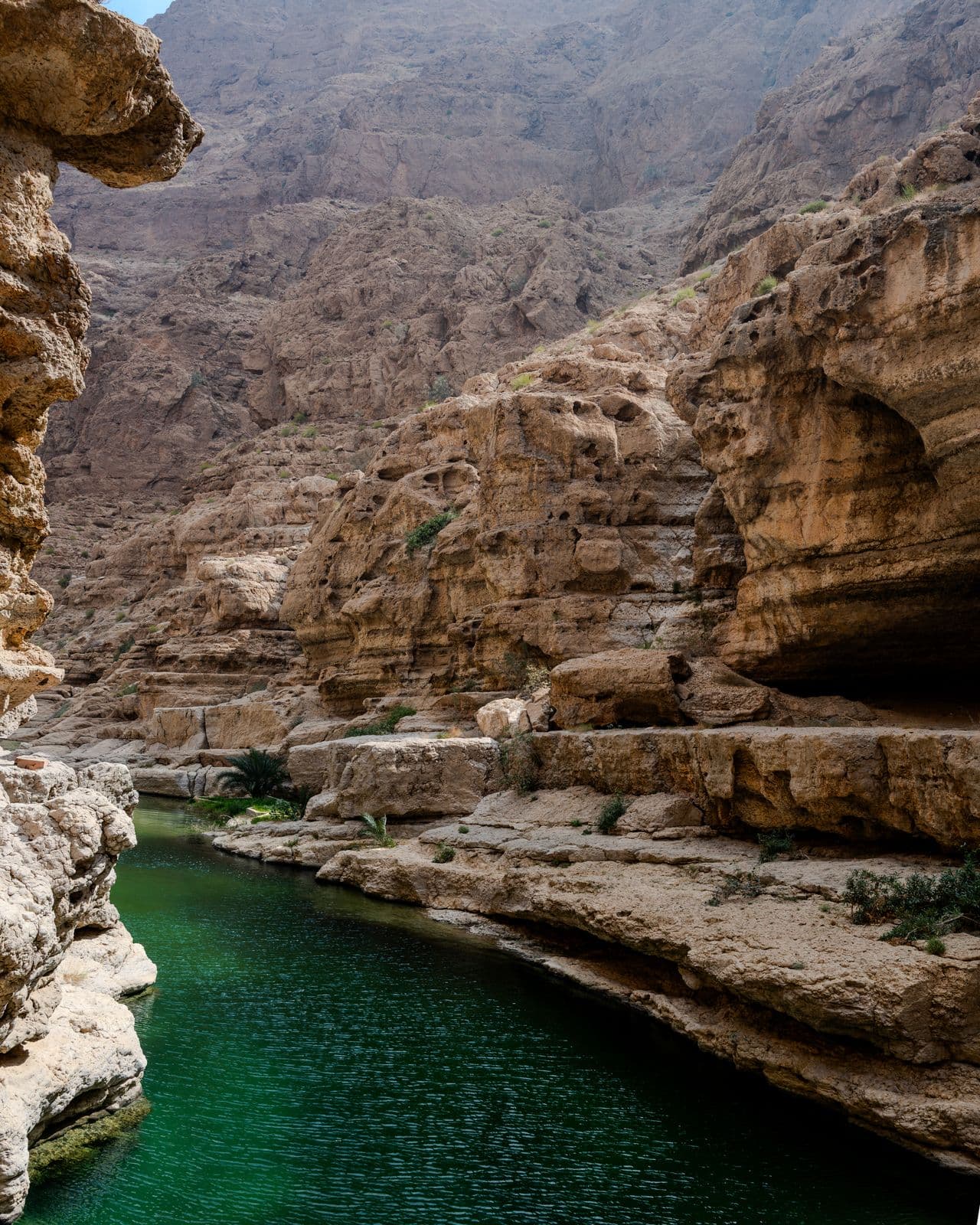
Wadi Tiwi is a limestone gorge in the eastern Hajar mountains, punctuated by turquoise pools and terraced palm groves. Less crowded than the nearby Wadi Shab, it offers an immersion in a preserved landscape and villages inhabited for centuries.
Wadi Tiwi is a lush gorge carved into the eastern Hajar mountains, about a hundred kilometers south of Muscat. Its ochre limestone cliffs plunge onto a succession of turquoise pools, palm groves and perched villages. Unlike the more frequented wadis in the region, Tiwi retains a preserved atmosphere and dense vegetation that stands out against the surrounding aridity.
Practical information at a glance
- Access: Asphalt road from the village of Tiwi on the coastal route (Route 17), then 4×4 track recommended to venture up the wadi.
- Vehicle: 4×4 essential beyond the first few kilometers; certain passages cross the wadi bed.
- Dress code: Clothing covering shoulders and knees out of respect for inhabited villages; swimwear for the pools.
- Recommended duration: Half-day to full day depending on how far you explore.
- Entrance: Free.
What to see
The wadi opens onto natural pools with clear waters, fed by permanent springs. The limestone walls, sometimes vertical, frame terraced gardens where banana trees, papaya and date palms grow. The further up you go, the more discrete the villages become and the denser the vegetation. The last accessible village, Mibam, often marks the end of the drivable track.
History and context
The villages of Wadi Tiwi have been inhabited for centuries. The falaj — traditional Omani irrigation channels inscribed on the UNESCO heritage list — distribute water from the springs to the terraced gardens. This ancestral hydraulic system explains the sustained presence of populations in a mountainous environment that is difficult to access.
Highlights of the visit
The pools and swimming
The first pools, accessible on foot from the wadi entrance, are the most frequented. The water is cool even in summer. A few deeper pools can be discovered by walking further up along the rocky bed.
The 4×4 track
The road runs alongside the watercourse, crosses the wadi bed several times and offers sweeping views over the palm groves. The ford passages are navigable outside flood season; after heavy rain, the wadi can become impassable.
The terraced villages
Several hamlets cling to the flanks of the gorge. Inhabitants still cultivate their gardens using traditional methods. Discretion is essential: these villages are lived-in places, not developed tourist sites.
Etiquette and visiting rules
- Ask permission before photographing residents, particularly women.
- Do not enter private property without an invitation.
- Take all your rubbish with you; no waste collection infrastructure exists in the wadi.
- Avoid loud music near villages.
Photography tips
Morning light is ideal: it illuminates the cliffs without backlighting and brings out the green of the palm groves. At midday, the gorges are partially in shadow depending on the season. Pools photographed from high rocks reveal their turquoise color better.
Location and access
Wadi Tiwi is located on the South Batinah / North Sharqiyah coast, between Sur and Muscat, in the immediate vicinity of the village of Tiwi on Route 17. Wadi Shab, another renowned gorge, is located a few kilometers north and is often visited on the same day. The coastal road is asphalt and accessible by standard car up to the wadi entrance.
Nearby attractions
- Wadi Shab — Neighboring gorge famous for its pools accessible on foot and by boat, a few kilometers to the north.
- Sur — Historic port town known for its traditional dhows and lagoon, about 80 km to the south.
- Ras al-Jinz — Nature reserve where green sea turtles come to nest, at Oman's easternmost cape.
- Bimmah Sinkhole — Natural sinkhole with turquoise waters developed as a park, on the coastal road toward Muscat.
Frequently asked questions
October to April offer pleasant temperatures. In summer, the heat is intense but the pools remain cool. Avoid the rainy season (khareef, July-September) if you plan to drive up the track: floods can make the wadi impassable.
For the first pools, a standard car is sufficient. To drive further up the wadi to the villages and ford passages, a 4×4 is essential. The track includes rocky bed crossings that can damage low-clearance vehicles.
Yes, the two wadis are just a few kilometers apart. A full day allows you to visit both, dedicating the morning to one and the afternoon to the other. Plan to leave early to avoid midday heat.
Swimming in the pools is commonly practiced. Wear appropriate clothing to access areas near villages; a swimsuit is acceptable in isolated pools.
The wadi has no tourist infrastructure. Bring water, food and everything you need before entering. The village of Tiwi at the entrance has a few basic shops.
Landscape photography is free. For residents, always ask permission. Avoid photographing women without their explicit consent.
Interested in this visit?
We can include it in your personalised itinerary.