Al Hoota Cave
Al Hoota Cave
Al Hoota is a limestone cave open to the public near Al Hamra, Oman. It is home to an underground lake populated by blind fish and remarkable stalactite formations, to be explored on a guided tour.
Al Hoota is one of the few natural caves open to the public in Oman. Carved into the limestone massif of Jebel Shams, it extends for several kilometres and is home to an underground lake populated by blind fish. Located near the village of Al Hamra, a short distance from Nizwa, it makes for a natural stop on the route through the western Hajar mountains.
Practical Information at a Glance
- Access: paved road from Al Hamra; car recommended, no regular public transport.
- Recommended duration: 1 to 1.5 hours for the guided tour and adjoining museum.
- Dress code: closed-toe shoes mandatory inside; the cave is cool, a light layer is useful.
- Accessibility: the underground route includes stairs and narrow passages; limited access for people with reduced mobility.
What You'll See
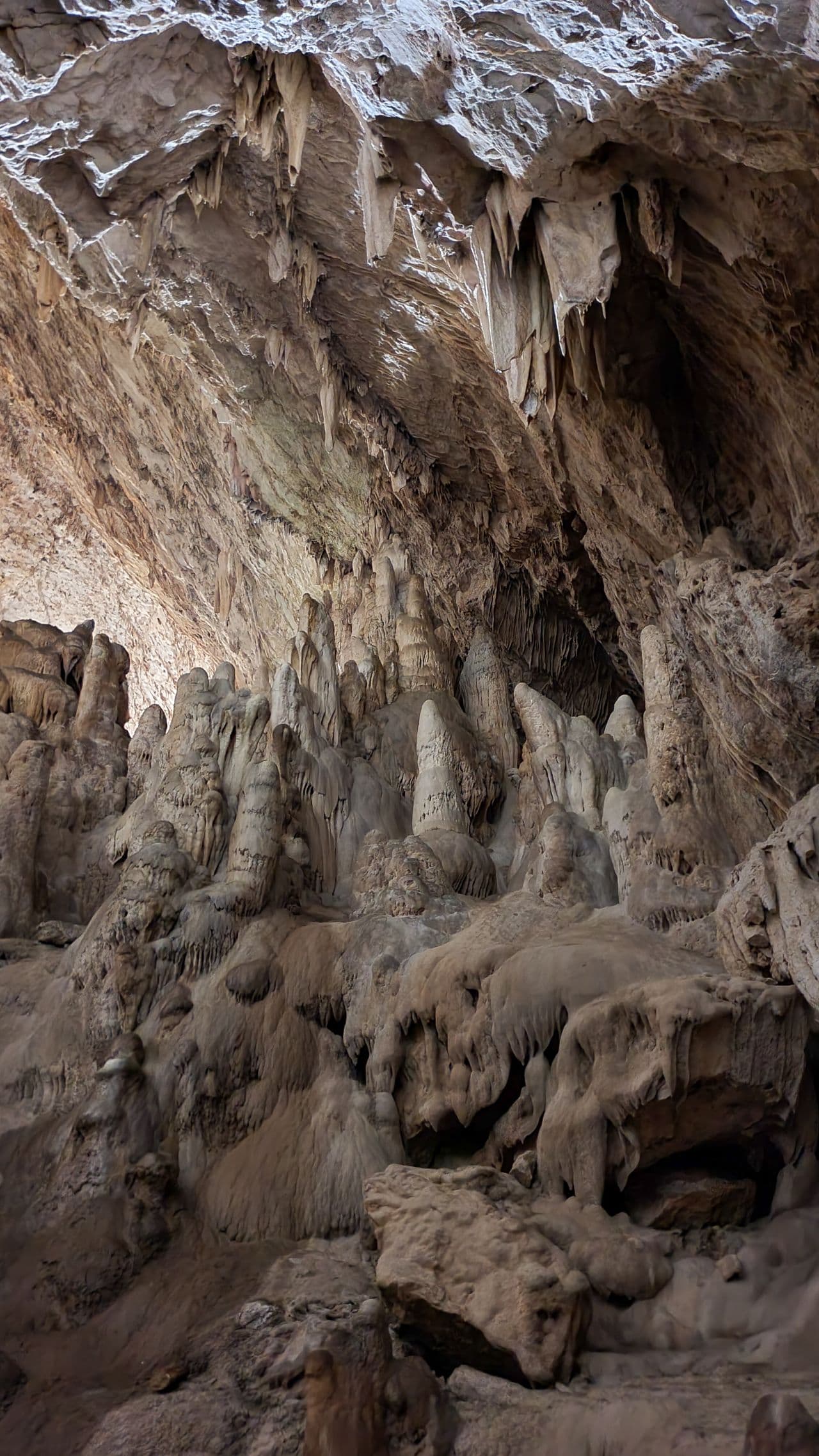
The guided circuit traverses chambers adorned with stalactites and stalagmites formed over millions of years. The highlight is the underground lake, home to a species of blind fish (Garra barreimiae) adapted to total darkness. A small electric train connects the entrance to the first chambers, making access to the most spectacular part of the cave system easier.
History and Context
The cave was known to local inhabitants for centuries, but systematic scientific exploration dates to the 1980s and 1990s. International speleologists mapped the cave system, estimated at over 4 km of galleries. Only about 500 metres is open to the public. A geology museum installed at the entrance traces the formation of Jebel Hajar and the natural history of the site.
Highlights of the Visit
The Underground Lake and Its Blind Fish
Watching fish move through black water, with no natural light source whatsoever, remains the most striking experience. The species found here is endemic to only a few karst systems in Oman and the United Arab Emirates.
Limestone Formations
Stalactites, stalagmites and columns develop at a rate of just a few centimetres per century. Guides point out the oldest formations and explain the mechanisms of limestone dissolution by slightly acidic water.
The Geology Museum
Before or after descending into the cave, the museum displays rock samples, maps of the cave system and panels on cave fauna. Brief but well-designed, it provides context for what you observe underground.
Photography Tips
The cave is dark; a camera capable of high ISO without excessive noise is preferable to a standard smartphone. Direct flash flattens relief: favour the ambient light from spotlights installed by the site managers. Photos of the lake are permitted, but check the guide's instructions on site, as rules may change.
Location and Access
Al Hoota is located approximately 200 km south-west of Muscat, between Nizwa and Al Hamra. The road from Nizwa passes through landscapes of cliffs and palm groves. A 4×4 is not necessary to reach the cave, as the final access track is paved. Local agencies in the Nomadays network offer circuits combining the cave with Jebel Shams and the region's mud-brick villages.
In the Area
- Jebel Shams — Oman's highest peak offers views over the Omani Grand Canyon, less than an hour's drive away.
- Nizwa — The former capital, famous for its circular fort and souks selling pottery and khanjars.
- Al Hamra Village — One of Oman's best-preserved mud-brick villages, just minutes from the cave.
- Misfat Al Abriyeen — A perched village with agricultural terraces irrigated by a traditional falaj system.
Frequently asked questions
The cave maintains a cool temperature year-round, making it a pleasant option even in summer. Autumn and winter (October to March) remain the best seasons for combining a visit with hiking in Jebel Shams.
The tour is guided; it is not possible to explore the galleries on your own. Groups depart at regular intervals from the entrance.
During peak tourist season, booking in advance or arriving early is recommended to avoid waiting for the next group departure. Check the arrangements directly with the site or your local agency.
Yes, the two sites are close to each other. One day is enough to visit the cave in the morning and reach the Jebel Shams plateau for a hike or views of the canyon in the afternoon.
Yes, the route is accessible to children in good physical condition. The small electric train and spectacular formations make the visit fun. Bring closed-toe shoes and a light jacket.
Interested in this visit?
We can include it in your personalised itinerary.